Artificial Intelligence in Medical Imaging: A Critical Review of Methods, Applications, and Clinical Implementation
DOI:
https://doi.org/10.65718/inspireHealth.2026.2009Keywords:
Artificial Intelligence, Medical Applications, Critical Review, Clinical Relevance, Citation Network Analysis, Deep Learning, Healthcare AI, Translational MLAbstract
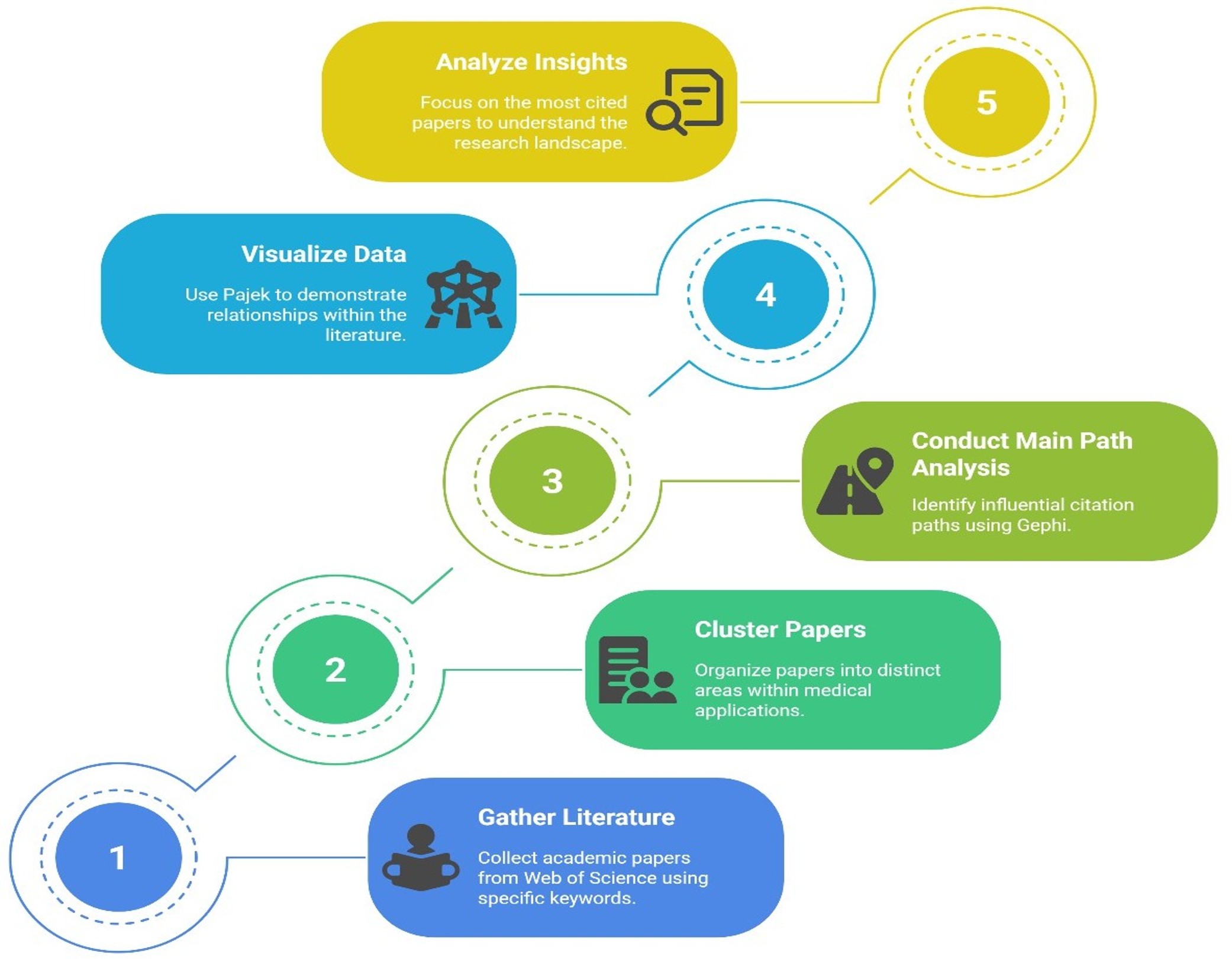
Artificial intelligence (AI) has rapidly advanced the analysis of medical images, opening up new ways to find, diagnose, and make clinical decisions about diseases. This study offers a comprehensive critical review of AI-driven methodologies in medical imaging, focusing on their clinical significance and practical applicability. Using Citation Network Analysis (CNA), a systematic literature search was set up that found five main thematic clusters: oncology, neurodiagnostics, Alzheimer's disease, Multiple Sclerosis, and advanced segmentation techniques. The analysis demonstrates that deep learning methodologies, such as Convolutional Neural Networks and U-Net architectures, have markedly enhanced the precision of tumor detection and segmentation by incorporating high-resolution contextual and spatial features. Machine learning models have shown great promise in neurological imaging for finding problems and keeping an eye on the progress of lesions, especially in Alzheimer's disease and Multiple Sclerosis. Even with these improvements, there are still problems with dataset diversity, ethical issues, and real-world clinical validation. The results show that AI systems need to be integrated into routine clinical practice successfully, which requires collaboration between different fields, fair datasets, and strong regulatory validation.
Downloads
Published
Issue
Section
License
Copyright (c) 2026 Inspire Health Journal

This work is licensed under a Creative Commons Attribution-NonCommercial-NoDerivatives 4.0 International License.